
The Algorithm Is Only as Smart as What You Tell It
Thought Leadership
|November 11, 2026
Meta’s 2026 Performance Unlocked workshops covered a lot of ground on signal optimization strategies, ad diversification, measurement, and the same message came up in every session. Ad platforms have gotten good at optimizing and finding results, but the brands that win are the ones feeding the system the right food.
Here are a few key themes and our take on them:
Your acquisition budget is probably paying for customers you already have.
Meta’s new customer lifecycle strategy, available for sales campaigns only, lets advertisers mark a campaign as acquisition-only. Meta then uses your customer lists and conversion data to keep these ads away from people who already buy from you.
It fixes a common blind spot. Most brands split their media into acquisition (finding new customers) and retention (bringing back existing ones). On paper, acquisition campaigns reach new people. In reality, the algorithm goes after whoever is most likely to convert, and that’s usually someone who’s already a customer. Nobody decides it should happen, but over time an “acquisition” campaign drifts toward your existing buyers. The results look great, but many of those sales would have happened anyway.
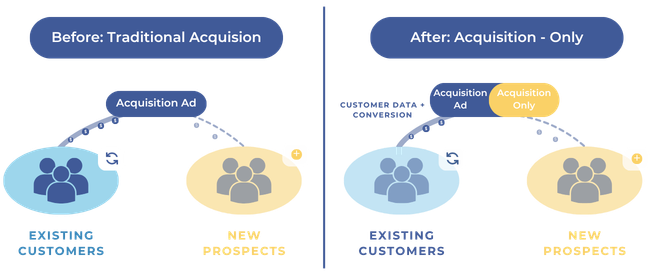
Our take: if new customer growth is the goal, keep acquisition and retention clearly separate, and judge acquisition on new buyers, not total sales. Cost per acquisition will go up, and that’s the point. We’d rather pay a little more for real growth than pay for sales that were already coming. As Meta increasingly focuses on reaching new customers, brands that have a clear understanding of their target audience will be better positioned to drive growth.
Creators are the secret to creative variety, from awareness to conversion.
Ad platforms like Meta now handle most of the targeting, which means the creative is doing the work. Meta’s system matches each person with the ad they’re most likely to resonate with. With one ad, it can only find people who respond to that one message. With real variety in messages, formats, people and use cases, it can reach many more kinds of buyers. Ad variety also keeps creative fatigue in check. Ten versions of the same ad wear out together, while genuinely different ideas keep finding new audiences.

The challenge is that most brands can’t produce that much creative on their own. That’s where creators come in. Each one brings their own voice, audience and way of talking about a product, so every creator adds real variety, not just another resize of the same ad. And they’re no longer just an awareness play. Creators can drive results at every stage of the funnel, from unboxings and tutorials to deal reveals.
Our take: we’ve been building more creative variety into our media, and we’re leaning in even more for 2027. For one client, we’ve been testing creator ads, which are UGC-style content that runs through the brand’s own handle. The results? An 11% lower cost per engagement than our general brand creative, and they’re usually less expensive to produce than polished brand ads or even influencer partnerships. Going into 2027, creators won’t be a separate awareness line item. They’ll be one of the main ways we build variety into the plan from the start.
The algorithm will keep getting smarter, but the brands that win during the holidays and into 2027 will be the ones giving it the clearest goals, the cleanest data and the best creative to work with.
Related Articles

June 10, 2023
Thought Leadership
Entering the Entrepreneur Economy
U.S. new business applications were already on the rise before COVID-19. The upward trend in entrepreneurship has…

June 10, 2023
Thought Leadership
The Learning Stage of the Journey
The Learning Stage of the customer journey is incredibly important for consumers as they begin to shape their brain with new…

June 10, 2023
Thought Leadership
Differentiation in an Ocean of Agencies
There are 66,113 businesses in advertising, PR, and related services in the U.S. You need more than the promise of great…