What’s Really Happening in the Retail Economy?
Apparel
Business Performance
Consumer Insights
Retail
Thought Leadership
|September 12, 2024
Retailers have seen steady growth over the last five years despite the turbulent economic environment and confounding effects of supply chain pressure and inflation. The “obvious” and prevailing storyline is that growth in the retail sector is wholly driven by ecomm and retailers should look to invest there to drive growth often at the expense for brick and mortar locations. There’s no question that ecomm growth has and will continue to drive the future of the retail sector, but we think the story is a bit more complicated and retailers would be wise to examine all the factors before implementing a strategy that will change the course of business for years to come.
As we’ve posited, ecomm is the growth opportunity in the retail sector. That has become overwhelmingly clear as the economy has returned to some semblance of normal following the pandemic, specifically since 2022. Despite the obvious trend, I believe that the death of brick and mortar have been greatly exaggerated. Brick and mortar sales still represent over 5x the volume of ecomm and we don’t project that meaningfully changing for a long time. Retailers need to take a parallel path approach to growth, maintaining their in-store presence while pushing growth in ecomm.
The numbers behind the headlines are interesting and a lot more nuanced than they are often portrayed. So, let’s dive into the data.
First, the bad news…
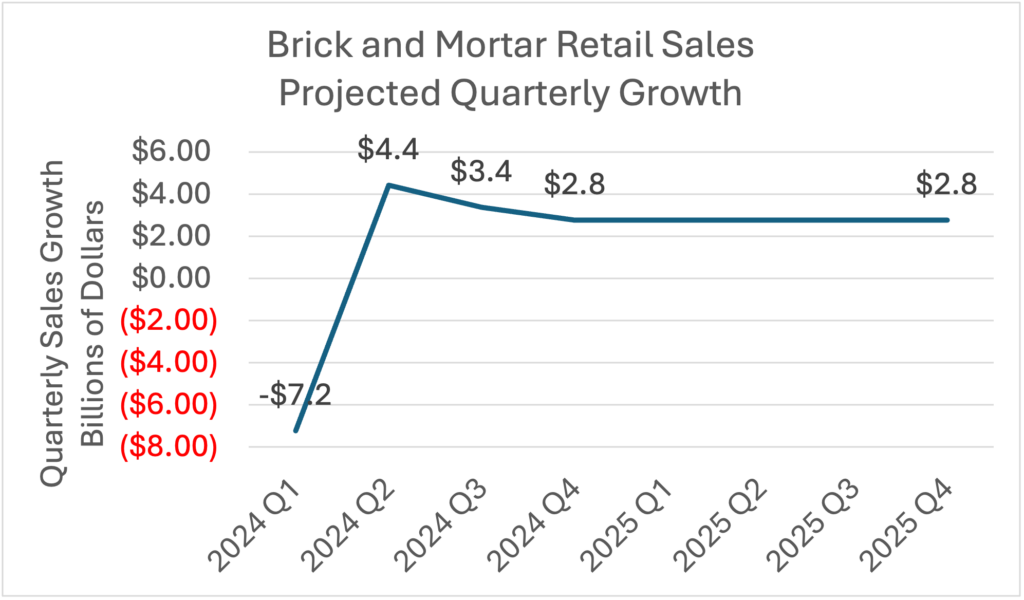
Brick and mortar retailers have seen essentially no growth in sales since 2022.
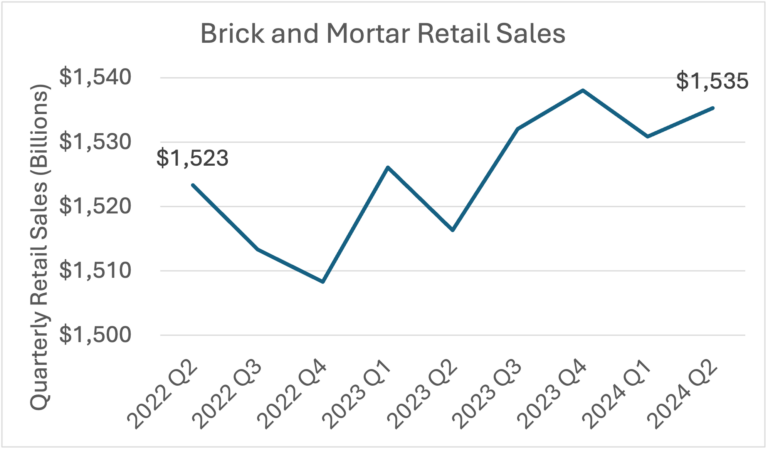
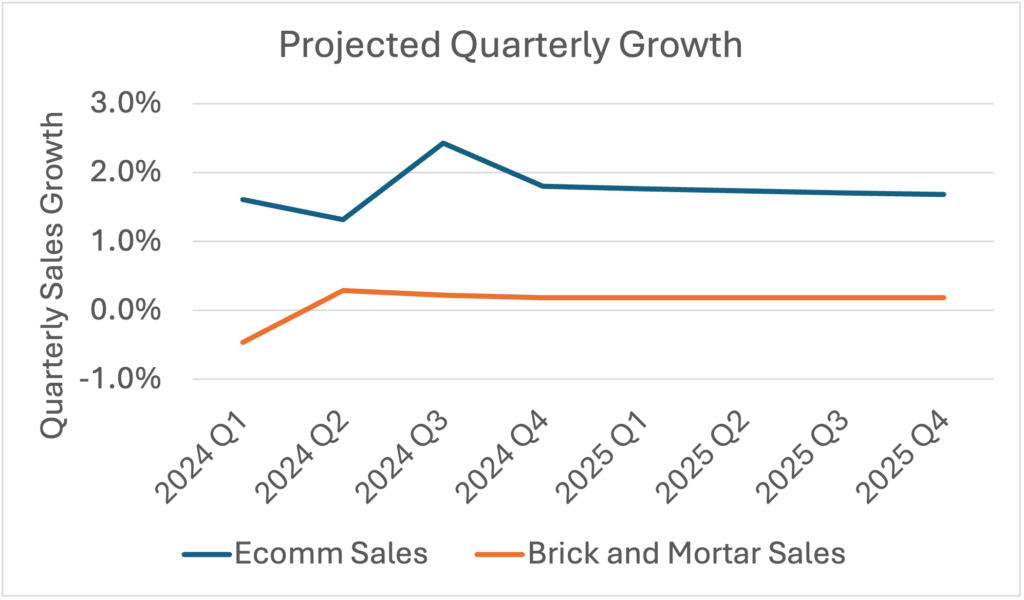
There’s nothing in the data that suggests this trend will change. We project that brick and mortar sales will remain essentially flat through 2025.
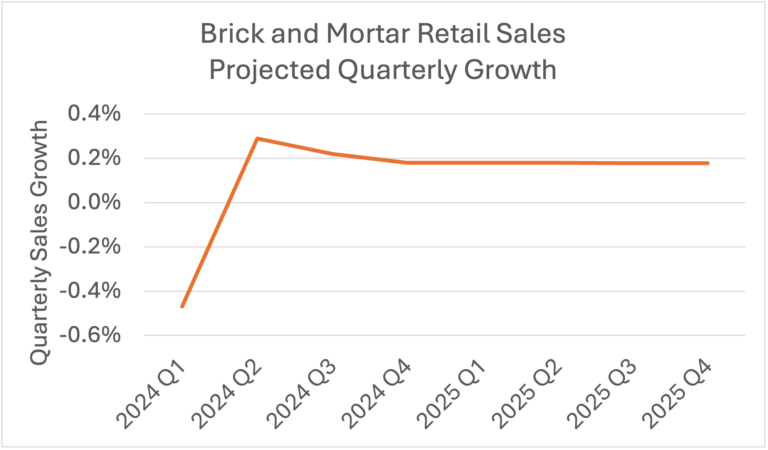
Brick and mortar represents the majority of retail sales, so stagnant growth does not bode well for retailers overall.
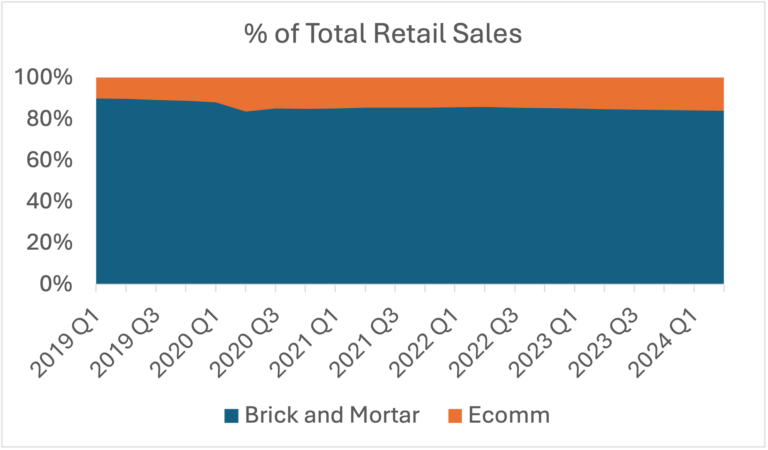
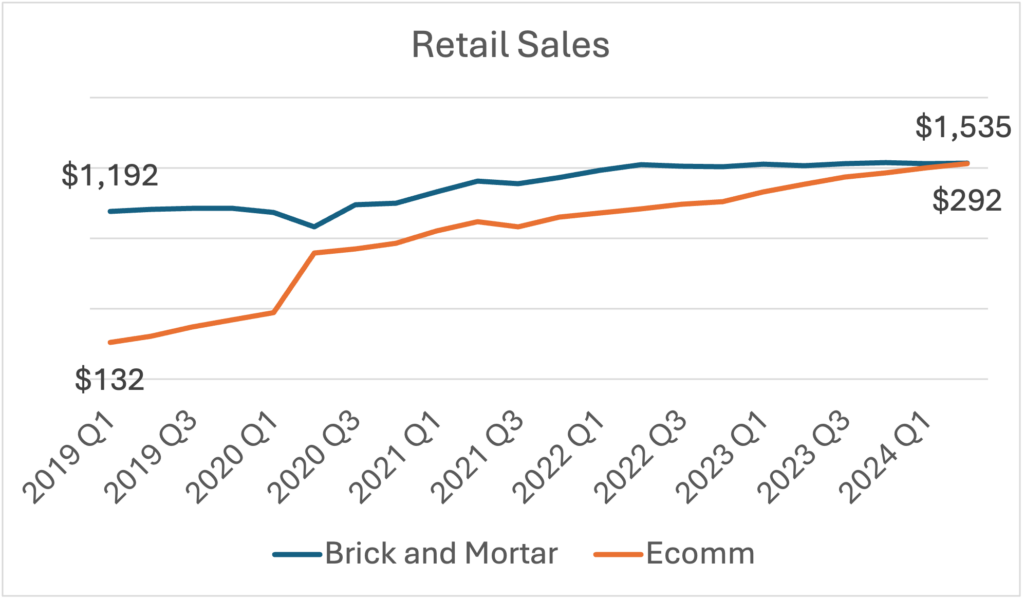
Ecomm has grown as a percentage of total retails sales, particularly since the pandemic. However, it still represents less than 1/5 of total retail sales. Given current trends, we don’t expect ecomm to exceed 20% of total retail sales until 2029.
Look on the bright side…
Brick and mortar retailers have seen only 3 quarters of negative YoY growth since the beginning of 2019. Brick and mortar sales are surprisingly consistent and resilient despite lockdowns, the economic environment, and other market trends.
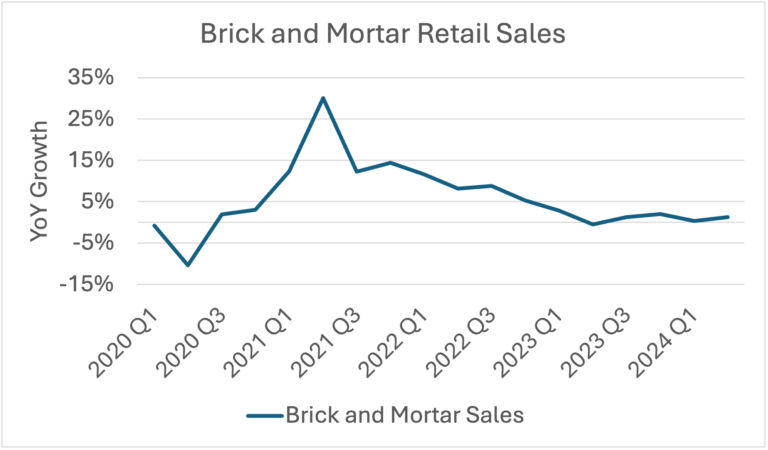
Retail sales volume is growing. Ecomm sales have continued their strong upward trend, accelerated by the pandemic.
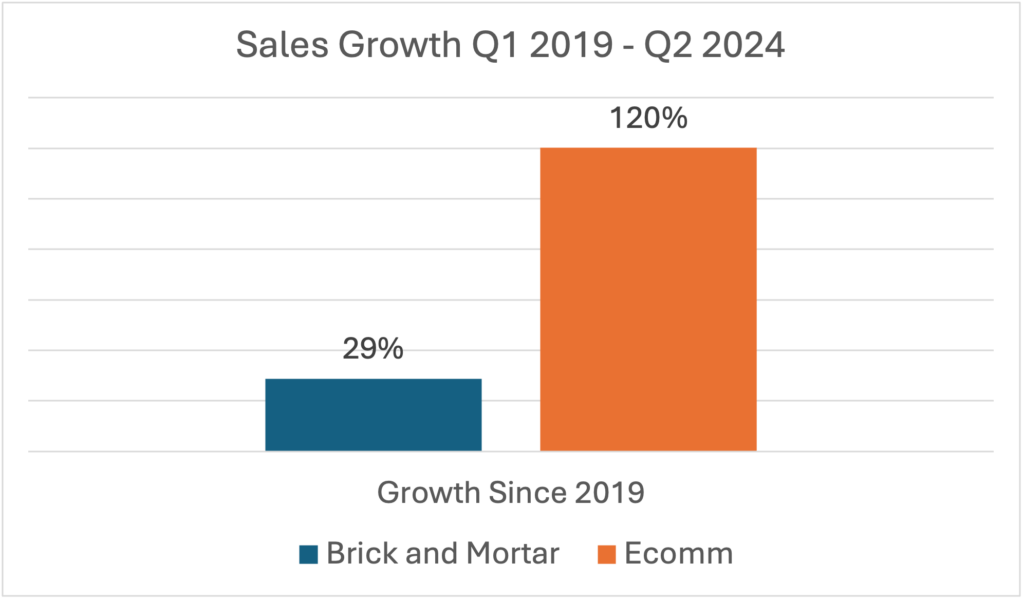
Total quarterly ecomm sales volume has grown 120% since 2019, while brick and mortar sales have grown 29% in the same period. It’s clear that ecomm is the opportunity for growth, but brick and mortar sales have been surprisingly strong as well.
Capitalizing on the growth of ecomm will be a key driver of brand success over the next five years. Given recent trends, we project roughly 2% quarterly growth in ecomm sales through 2025 vs 0.2% for brick and mortar.
Retail growth is substantial in absolute terms despite the relatively low rate. We project $17.2 billion growth in quarterly retail sales by Q4 of 2025.
How do brands capitalize?
First and foremost, brands should look to maintain their brick and mortar presence, while optimizing the experience, marketing support, and promotional strategy. From a marketing standpoint this can include things like optimizing campaigns across channels to capture seasonal demand, cutting non-performant channels, and looking to broaden the overall marketing mix to reach new customers. Brick and mortar is and will continue to represent the vast majority of retail sales for the foreseeable future so it can’t be ignored when setting the strategy.
Secondly, brands should look to capitalize on the opportunity in ecommerce that the current market has presented. This will mean a variety of things from capturing purchases from current brick and mortar customers to finding all new customers that prefer to shop online and creating opportunities to increase purchase frequency. Our in-house research and marketing mix models have consistently show that multi-channel retailers drive much more relative incremental volume with marketing in ecommerce compared to brick and mortar. This finding is a blessing and a curse as it offers opportunity for brands that are willing to invest, but also highlights the heavy opportunity cost of not investing in ecomm marketing.
At the start of this article, we suggested a parallel path approach to growing your retail business. We believe that approach is the only viable strategy to maintaining a strong retail presence in the current environment. Brick and mortar will continue to represent the majority retail sales for the foreseeable future and maximizing marketing support for that channel will remain key to business success. On the other hand, ecomm represents the lion’s share of the growth opportunity for retail brands. Brands that give this emerging channel the focus, investment, and marketing support that it deserves will be well-positioned to dominate the next phase of the retail economy.